Ofcom Broadcast Radio Licensing Priorities – Where Better Media’s Recommendations Are Reflected
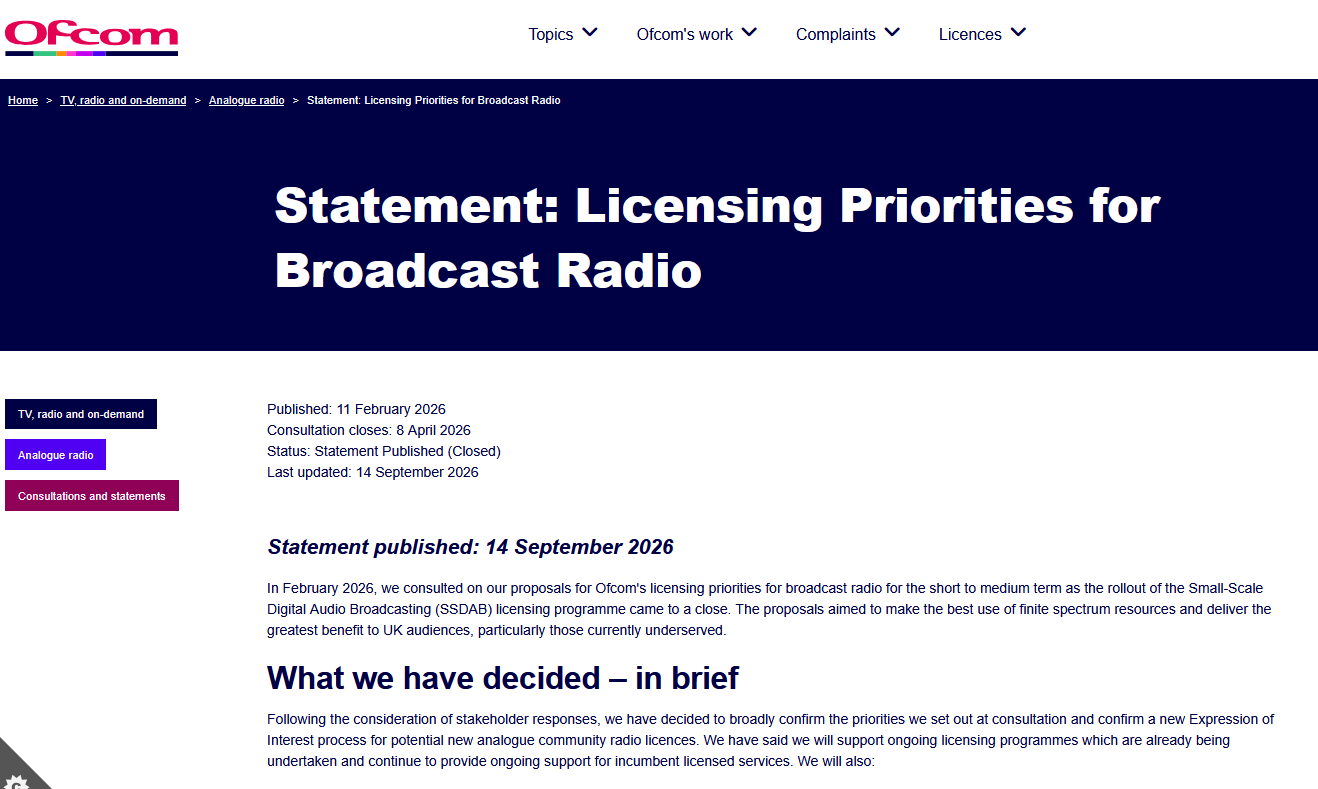
Ofcom has now published its final Licensing Priorities for Broadcast Radio statement following the consultation earlier in 2026.
Better Media argued that future radio licensing should place greater emphasis on access, plurality, competition and the sustainable growth of smaller, independent and community-based services.
Several parts of Ofcom’s final position closely reflect those points.
Small-Scale DAB and Community Radio
Better Media called for Small-Scale DAB to remain the main low-cost digital route for new services, while retaining access to FM community radio where suitable spectrum is available. It also argued that Ofcom should avoid expanding Local DAB where this could undermine the developing SSDAB sector.
Ofcom has retained SSDAB as a central priority. This includes new opportunities in unserved areas, coverage extensions for existing multiplexes, and a more flexible approach to the forty per cent overlap rule. Ofcom has also confirmed that it will consider new FM community radio licences.
Expression of Interest Process for FM
One of the clearest areas of alignment concerns the new FM licensing process.
Better Media recommended a preliminary Expression of Interest stage before a full licensing round, so that Ofcom could establish actual demand, identify areas where spectrum work was justified, and avoid unnecessary costs for applicants.
Ofcom has adopted this approach. It has now opened an Expression of Interest process for new community radio licences before inviting formal applications.
Local DAB and the Sustainability of SSDAB
Better Media also argued that new Local DAB multiplex licences should not be prioritised where they could weaken SSDAB sustainability or reinforce higher-cost incumbent structures.
Ofcom has decided not to proceed with new Local DAB multiplex licensing as a priority. One of its stated reasons is the risk that this could have a destabilising effect on the relatively new SSDAB market.
This is significant because Ofcom is increasingly framing its licensing approach in terms of growth. Its final statement places emphasis on supporting the development of services, improving coverage, enabling new entrants and maintaining plurality.
That broadly aligns with Better Media’s view that regulation should not simply preserve existing market structures, but should widen lawful access to spectrum and support a more diverse range of providers.
Operational Processes and Future Reform
Better Media also raised concerns about Ofcom’s operational processes. We argued that licensing policy should not be constrained indefinitely by staff capacity, queueing pressures and outdated administrative systems, and called for longer-term reform of licensing, spectrum and consultation processes.
Ofcom has acknowledged this argument. While no immediate operational reform has been announced, the final statement recognises that systems reform may be beneficial in the longer term.
This is an issue Better Media should continue to pursue. If Ofcom intends to support a genuine growth agenda, its operational systems will need to be capable of handling greater demand, more responsive licensing, improved data access and a wider range of entrants.
What Better Media Called For
Better Media called for:
- SSDAB to remain the main low-cost route for digital growth.
- Continued access to FM community radio.
- An Expression of Interest process before reopening FM licensing.
- Restraint on new Local DAB where it could destabilise SSDAB.
- Greater flexibility around the forty per cent SSDAB overlap rule.
- More transparent and responsive licensing processes.
- Longer-term modernisation of Ofcom’s operational systems.
- A regulatory approach that supports new entrants, plurality, investment and sustainable growth.
Assessment
Ofcom received responses from many organisations and individuals. However, there is clear alignment between Better Media’s submission and several material elements of the final policy. In particular, the Expression of Interest process for FM community radio and the decision not to prioritise new Local DAB multiplexes closely reflect arguments made in the Better Media response.
The next question is how this growth agenda works in practice. Better Media will need to monitor whether the new licensing arrangements genuinely reduce barriers to entry, support new and smaller providers, improve plurality and make it easier for community, civic and independent services to develop.